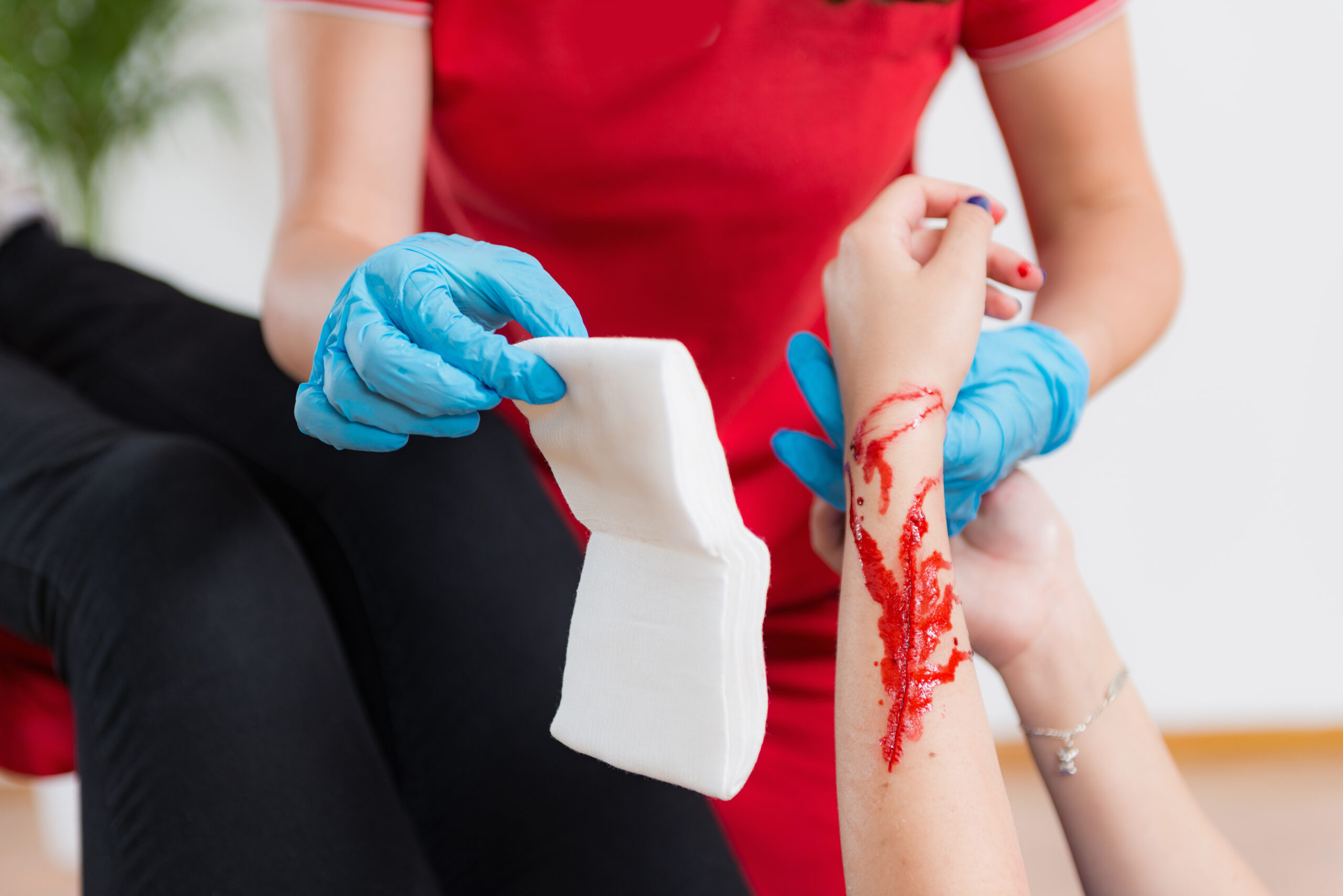
Brown snake bite first aid can save a life by slowing the movement of venom while an ambulance is on its way. If someone in Adelaide is bitten or suspected of being bitten by a snake, call Triple Zero (000), keep them completely still, apply a pressure immobilisation bandage to the affected limb and do not wash the bite. Treat every suspected snake bite as a potentially life-threatening medical emergency.
As Adelaide moves through spring and towards summer, spending more time outdoors also means being prepared for encounters with snakes. Whether you are gardening at home, walking through bushland, working outdoors or heading away for a weekend, knowing what to do after a suspected snake bite is a first aid skill worth having before you need it.
5 Key Takeaways
- Call Triple Zero (000) immediately for any suspected snake bite.
- Keep the casualty completely still and bring help to them rather than allowing them to walk.
- Apply pressure immobilisation to a bitten arm or leg and immobilise the limb.
- Never wash, cut or suck the bite, and never use an arterial tourniquet.
- Don’t waste time trying to identify or catch the snake. Treat the bite and wait for emergency medical assistance.

Brown Snakes and the Adelaide Summer
Brown snakes are a particularly relevant subject for South Australians. The eastern brown snake (Pseudonaja textilis) occurs from Queensland through eastern Australia and into South Australia and can occupy a surprisingly broad range of environments.
They favour open habitats and are also found in agricultural areas and around the suburban fringes of towns and cities. They may shelter beneath logs and rocks, in soil cracks and animal burrows, or under human-made materials such as sheets of iron and building materials.
That is one reason snake awareness isn’t only for people heading deep into the bush.
Around Adelaide and regional South Australia, an encounter can occur while clearing materials from around a property, working outdoors, gardening, walking or undertaking other everyday activities.
Eastern brown snakes can also be difficult for an untrained person to identify accurately. Colour alone isn’t a reliable field identification method, and several species can look similar.
Fortunately, you don’t need to identify the snake to provide appropriate first aid.
Is a Brown Snake Bite Always Obvious?
No. A brown snake bite may not look as dramatic as people expect.
Eastern brown snake bites can initially be painless and difficult to detect. A person may therefore have had potentially dangerous contact with a snake without an obvious painful wound to confirm it.
Don't wait for severe symptoms or obvious fang marks before taking action.
If there is reasonable suspicion of a snake bite, treat it as an emergency and call Triple Zero (000).
The casualty requires medical assessment even if they currently feel well.
Good first aid means responding to the potential seriousness of the emergency rather than waiting for the worst symptoms to appear.

How Does a Pressure Immobilisation Bandage Work?
The pressure immobilisation technique is central to Australian snake bite first aid.
Its purpose isn’t to squeeze venom out or completely stop blood circulation. The combination of firm pressure and immobilisation is intended to retard lymphatic flow and therefore slow the movement of venom from the bite area towards the circulation.
For a bite to an arm or leg, ANZCOR recommends applying a broad pressure bandage over the bite site as soon as possible. Elasticised bandages approximately 10–15 cm wide are preferred, although other material can be used when appropriate bandages aren’t available.
The bandage should be firm and tight. ANZCOR describes appropriate pressure as sufficiently firm that you should not be able to easily slide a finger between the bandage and the skin.
A further pressure bandage is then applied from the fingers or toes upwards, covering as much of the affected limb as possible. An alternative method uses a single bandage beginning at the fingers or toes and continuing upwards over the bite site and as much of the limb as possible.
The limb should then be splinted, including the joints on either side of the bite, to minimise movement. A sling can be used for an affected arm.
Once pressure immobilisation has been applied, do not remove the bandages or splint while waiting for the ambulance. They should remain in place until the casualty is assessed in an appropriate hospital environment.
What If You Don't Have a Snake Bite Bandage?
Don't give up because the ideal bandage isn't available. In an emergency, suitable alternatives can still be used.
A purpose-designed elasticised bandage is useful, but ANZCOR advises that if an elasticised or crepe bandage isn't available, clothing or other suitable material can be used.
If the recommended bandage isn't available, use clothing or another suitable material rather than doing nothing.
Keep the casualty and affected limb completely at rest. Limiting movement is a critical part of pressure immobilisation.
Use available materials to help splint the affected limb and prevent unnecessary movement while waiting for emergency services.
Remember: the goal is not simply to wrap the bite. Pressure and immobilisation work together to help slow the movement of venom.
Before Adelaide's warmer months arrive, check first aid kits at home, at work and in vehicles so appropriate bandages and basic first aid supplies are ready before an emergency happens.
Don't Wash the Snake Bite
Washing a wound usually sounds sensible, but a suspected snake bite is an important exception.
Do not wash the bite site.
Venom traces remaining on the skin or clothing may assist medical professionals with snake identification or clinical assessment. Washing the site can remove this potentially useful material.
Do not cut or incise the wound in an attempt to remove venom.
Attempting to suck venom from the bite is not recommended snake bite first aid.
An arterial tourniquet is not the recommended method for Australian snake bite first aid.
Focus on the proven priorities: call Triple Zero (000), keep the casualty still and apply pressure immobilisation where appropriate.
Should You Try to Catch or Photograph the Snake?
No. Your priority is the casualty, not the snake.
Trying to catch, corner or kill a snake creates an obvious risk of another bite. Even approaching it to obtain a better photograph can put you unnecessarily close to a potentially dangerous animal.
ANZCOR strongly recommends against attempts to kill the snake because doing so can result in multiple bites or another person being bitten.
If you happen to have observed the snake from a safe distance, you can tell paramedics what you saw. But don’t turn identification into another emergency.
You do not need to know the species before beginning snake bite first aid.
What If the Bite Isn't on an Arm or Leg?
Pressure immobilisation is most straightforward on a limb, but snake bites can occur elsewhere on the body.
ANZCOR advises that for a bite that isn't on an arm or leg, firm direct pressure over the bite site may be useful.
Pressure must not interfere with breathing or chest movement.
Important: firm pressure should not be applied to the head or neck.
Keep the casualty still, call Triple Zero (000) and follow the emergency call-taker's instructions while waiting for the ambulance.
What If the Casualty Becomes Unresponsive?
A snake bite can become a life-threatening medical emergency.
Continue observing the casualty while waiting for paramedics. If the person becomes unresponsive and is not breathing normally, begin CPR in accordance with the DRSABCD action plan.
ANZCOR specifically notes that there is no risk of venom transmission to the rescuer from providing CPR to a snake bite casualty.
If resuscitation is required, it takes priority. CPR should not be delayed because you are still trying to perfect a bandage.
This is where practical first aid training becomes particularly valuable. Reading the steps is useful; having practised CPR, emergency assessment and pressure immobilisation makes those actions much more familiar when you are under pressure.
A nationally recognised first aid course with First Aid Pro Adelaide gives participants the opportunity to develop practical emergency response skills rather than relying on something they vaguely remember reading years earlier.
Common Brown Snake Bite First Aid Mistakes
In a suspected snake bite emergency, some of the most dangerous mistakes come from moving the casualty, delaying the 000 call or relying on outdated remedies.
A person may feel completely normal and insist they can walk to the car or house. Keep them still and bring emergency assistance to them instead.
Do not wait for pain, weakness or other symptoms before acting. A suspected snake bite should be treated as potentially life-threatening from the outset.
Cutting or incising the wound is not recommended Australian snake bite first aid.
Trying to suck venom from the wound wastes time and is not part of recommended treatment.
An arterial tourniquet is not the recommended technique for Australian snake bite first aid.
Cleaning a wound is usually sensible, but a suspected snake bite is different. Do not wash the bite site.
Don't delay first aid while comparing photographs to decide whether the snake was an eastern brown, western brown or another species.
First aid doesn't depend on winning the identification contest. Call Triple Zero (000), keep the casualty still and apply appropriate pressure immobilisation without delay.

Prepare Before Adelaide's Warmer Weather Arrives
Snake bite first aid is one of those skills most people hope they will never need. That doesn’t make preparation unnecessary.
Before summer, check first aid kits at home, in vehicles and at workplaces. If you spend time bushwalking, camping, gardening or working outdoors, make sure appropriate broad elasticised bandages are readily accessible rather than buried at the bottom of a kit.
But equipment is only part of being prepared.
ANZCOR notes that correct pressure immobilisation can be difficult to achieve, and research has found that people frequently apply the technique inadequately. Knowing that a bandage is required and being able to apply one effectively are not quite the same thing.
That is where hands-on practice earns its place.
Completing a recognised First Aid course with First Aid Pro Adelaide can help you build practical skills in responding to emergencies, including CPR and first aid management. When something goes wrong, familiarity with the steps can make it easier to concentrate on the casualty rather than trying to remember what comes next.
Brown Snake Bite First Aid Is About Acting Early
A suspected brown snake bite isn’t an emergency to watch and wait.
You don’t need to see dramatic fang marks. You don’t need to wait for symptoms. And you don’t need to identify the snake before helping.
Call Triple Zero (000), keep the casualty still, apply pressure immobilisation and wait for the ambulance.
For Adelaide residents heading towards another warm-weather season, those are simple instructions worth knowing well.
And because emergency skills are easier to recall when you have actually practised them, consider completing or refreshing your first aid training with First Aid Pro Adelaide before summer. A snake bite may be uncommon in your everyday life, but if one occurs, knowing what to do from the first few minutes can matter enormously.
Related Reading
FAQs
How quickly do symptoms appear after a brown snake bite?
Symptoms and their timing can vary, and a person may initially appear well after a snake bite. Don’t use the absence of immediate symptoms as evidence that the bite is harmless. Treat any suspected snake bite as a medical emergency, call Triple Zero (000) and keep the casualty still.
Should you wash a brown snake bite?
No. Do not wash the bite site. Venom remaining on the skin or clothing may be useful to medical professionals. Apply pressure immobilisation and leave the bandage in place until the casualty is assessed in hospital.
How tight should a pressure immobilisation bandage be?
The bandage should be firm and tight enough to restrict lymphatic flow without being used as an arterial tourniquet. ANZCOR advises that you should not be able to easily slide a finger between the bandage and the skin. The limb should also be immobilised with a splint.
What can I use if I don't have a pressure immobilisation bandage?
ANZCOR recommends elasticised bandages where available, but clothing or other material may be used if suitable bandages aren’t available. Keep the casualty and affected limb as still as possible while emergency assistance is on the way.
Do I need to identify the snake before giving first aid?
No. Don’t attempt to catch or kill the snake. Doing so risks further bites and delays treatment. Call Triple Zero (000) and begin appropriate snake bite first aid immediately.