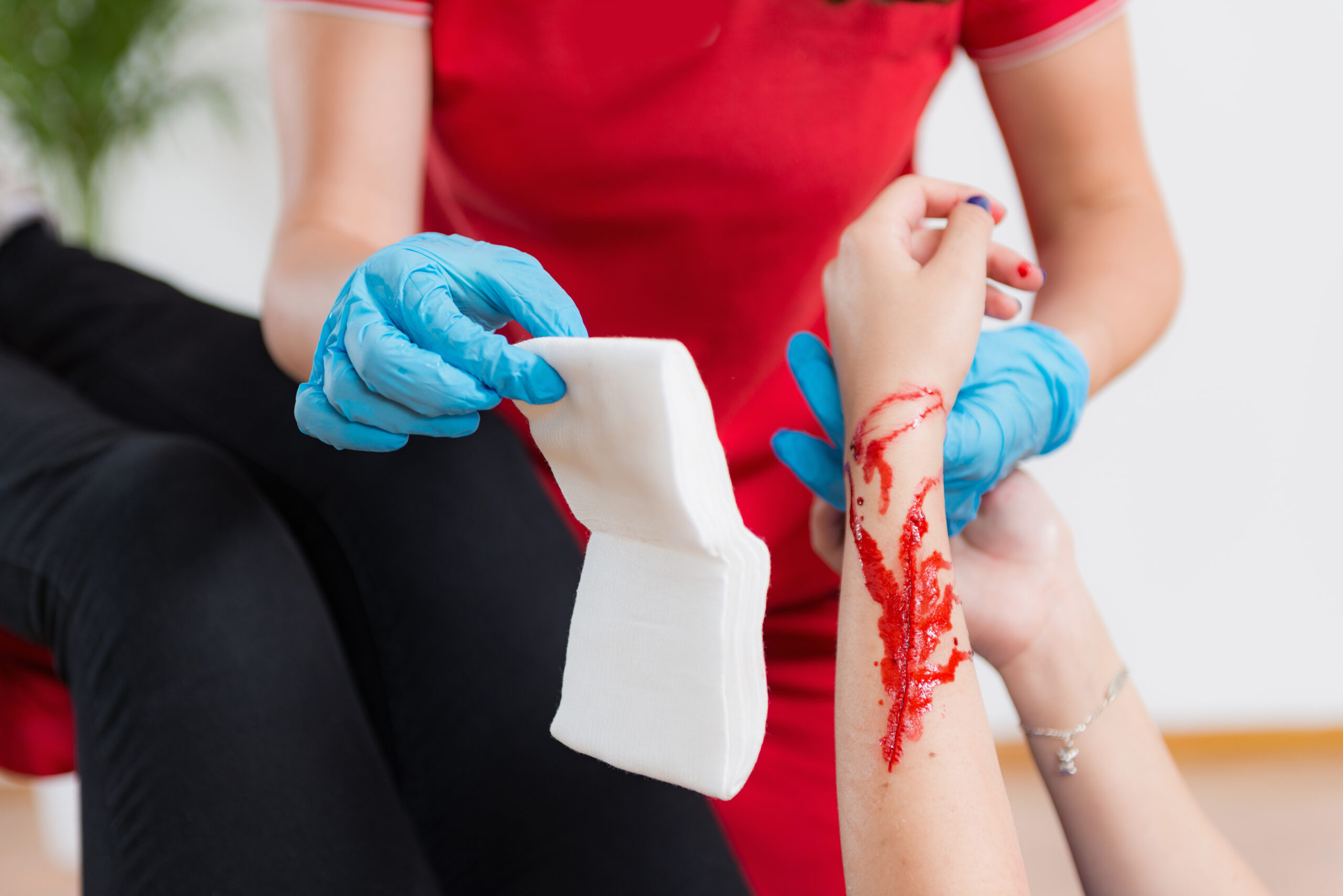
Wound care first aid in the workplace begins with protecting yourself, controlling bleeding and assessing how serious the injury is. Minor cuts and grazes can often be cleaned and covered with an appropriate dressing, while deep wounds, uncontrolled bleeding, embedded objects and signs of shock require urgent medical attention. For Adelaide workers, knowing the difference between a manageable minor wound and a medical emergency is an important practical first aid skill.
A cut from a utility knife in a warehouse, a puncture wound on a construction site or a graze in a commercial kitchen may initially seem straightforward. But wounds vary considerably in severity, contamination risk and the treatment they require. What matters is being able to assess what has happened, provide appropriate first aid within your level of training and recognise when professional medical care is needed.
That is one reason practical first aid training remains valuable across so many Adelaide workplaces. A recognised first aid course gives workers the opportunity to practise responding to bleeding and wounds rather than relying on instructions they may have read months or years earlier.
Key Takeaways
- Control bleeding first. Firm pressure on or around the wound is the primary method for controlling most external bleeding.
- Protect yourself as well as the casualty. Use appropriate standard precautions, including disposable gloves when available.
- Minor wounds should be cleaned and covered. Clean water or saline can be used to rinse a minor wound before applying a suitable dressing.
- Do not remove an embedded object. Apply pressure around it and obtain urgent medical assistance.
- Know when a wound is beyond basic first aid. Severe or uncontrolled bleeding, deep or gaping wounds, bites and signs of infection need appropriate medical assessment.

Why Wound Care First Aid Matters in Adelaide Workplaces
Cuts, grazes and puncture injuries can occur in almost any workplace, but some occupations naturally involve greater exposure to sharp tools, machinery, rough surfaces, glass, metal and other potential causes of injury.
Construction workers and tradespeople may work with power tools, sheet metal, nails and building materials. Warehouse and logistics workers handle packaging equipment, pallets and machinery. Hospitality workers regularly use knives, slicers, and encounter broken glass and hot equipment. Manufacturing, maintenance, landscaping and automotive work can introduce their own wound risks.
Even offices are not immune. A relatively small cut from broken glass or a fall resulting in a graze can still require appropriate first aid.
Safe Work Australia’s Model Code of Practice for First Aid in the Workplace provides guidance about workplace first aid arrangements, including first aid kits, procedures, facilities and training for first aiders. The appropriate arrangements depend on matters such as the nature of the work, workplace hazards, workforce size and location.
The objective is not to turn every employee into a healthcare professional. It is to make sure appropriate help can be provided during the important period between an injury occurring and further medical treatment being available.
Not Every Wound Is the Same
“Wound” is a broad term for an injury involving the skin and potentially the tissue underneath it.
Recognising the type and severity of a wound can help a first aider decide what to do next.
Cut
A cut may have relatively straight edges and is often caused by something sharp, such as a knife.
Laceration
A laceration tends to be a deeper tear or cut, often with irregular edges.
Graze or Abrasion
A graze or abrasion affects the surface of the skin and may contain dirt or debris.
Puncture Wound
A puncture wound occurs when a pointed object penetrates the skin and may extend considerably deeper than its small surface opening suggests.
A small, superficial cut that stops bleeding quickly is very different from a deep wound that continues bleeding despite firm pressure.
Likewise, a small puncture caused by a dirty nail should not necessarily be dismissed simply because there is little visible bleeding.
Start With Your Own Safety
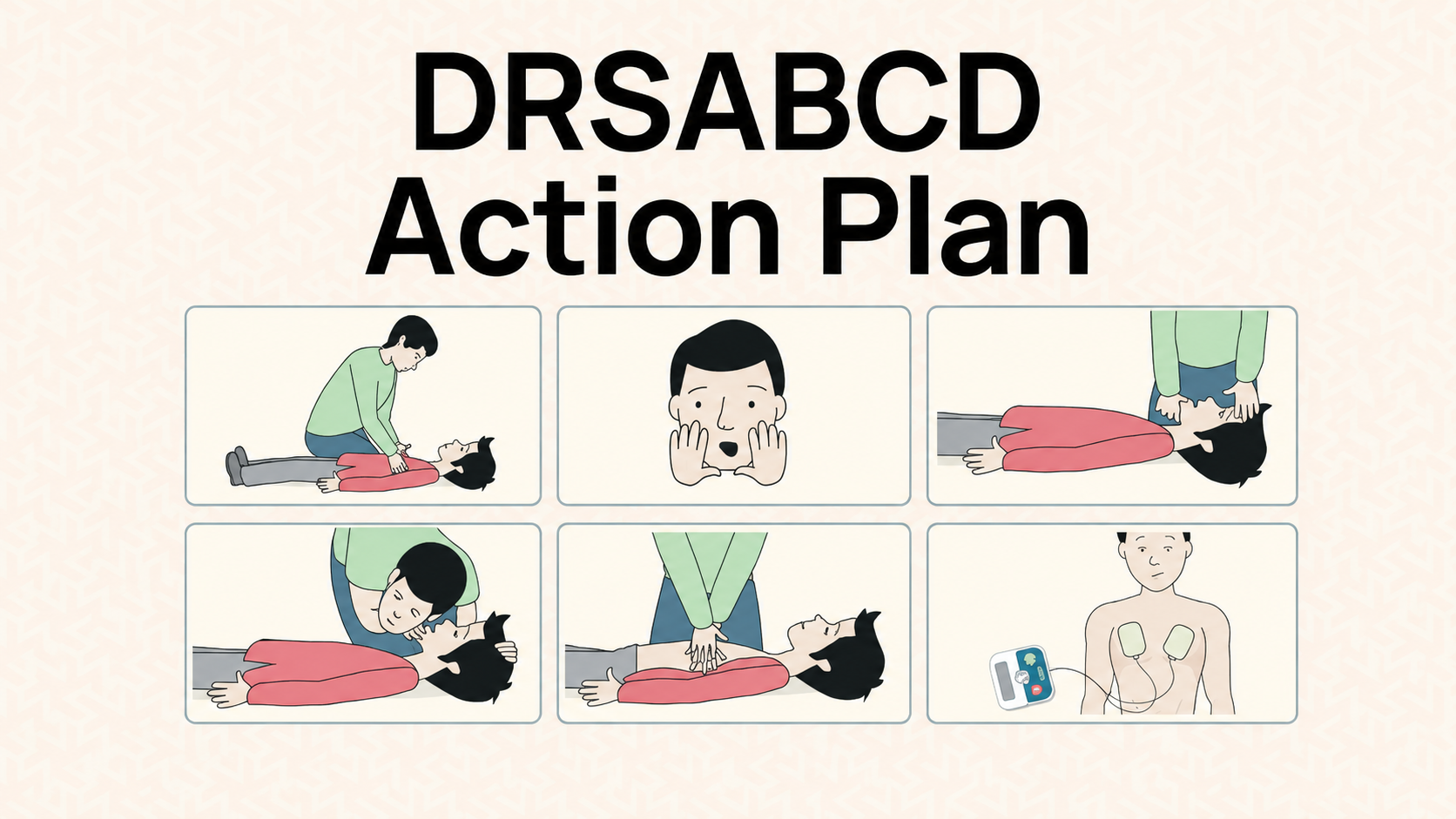
First aid begins before you touch the wound and accredited training emphasises the DRSABCD protocol.
Blood and other body fluids can present an infection risk, so standard precautions are important. ANZCOR recommends using precautions such as gloves and protective glasses when they are readily available when managing bleeding.
If disposable gloves are available in the workplace first aid kit, put them on before treating the wound. Consider eye protection where there is a realistic possibility of blood splashing.
The broader environment also needs attention.
If somebody has been injured by machinery, electricity, broken glass or another workplace hazard, make sure approaching them does not expose you or others to the same danger. Stop or isolate the hazard where this can be done safely and in accordance with workplace procedures.
A first aider who becomes injured cannot effectively help the original casualty.
Controlling External Bleeding
When a wound is bleeding, controlling that bleeding becomes the immediate concern.
ANZCOR advises that pressure on or around the wound is usually the fastest, easiest and most effective method for stopping external bleeding. Where the bleeding point can be identified, firm direct pressure should be applied with hands or a pad over the bleeding point.
For most non-life-threatening bleeding, the casualty should otherwise be assessed according to the usual DRSABCD approach.
If bleeding continues through the first dressing, ANZCOR advises applying a second pad and a tighter bandage. If it still continues, check whether the pads and bandage are correctly positioned over the actual bleeding point. Simply piling more and more dressings over the area may provide less effective pressure than correctly positioning one or two pads over a small bleeding point.
Where possible, encourage the injured person to remain still. Movement of an injured limb can also be restricted.
One older piece of first aid advice is worth correcting: elevating the injured limb is not an evidence-based method of controlling bleeding. ANZCOR states there is no evidence that elevation helps control bleeding and notes that it may cause additional pain or injury.
When Bleeding Becomes Life-Threatening
A serious workplace injury requires a different level of response.
ANZCOR identifies circumstances indicating severe, life-threatening bleeding, including bleeding that cannot be controlled with local pressure and bleeding associated with signs of shock. Major trauma and an amputated or partially amputated limb above the wrist or ankle are also treated as life-threatening bleeding.
In these circumstances, call Triple Zero (000) for an ambulance.
ANZCOR makes an important distinction for life-threatening bleeding: controlling the bleeding takes priority over airway and breathing interventions. The casualty should be assisted to lie down and firm pressure applied while emergency help is arranged.
For life-threatening bleeding from a limb that cannot be controlled with pressure, ANZCOR suggests an arterial tourniquet where the first aider is trained to use it and one is available. Haemostatic dressings may also have a role in particular severe bleeding situations when the responder is trained and the appropriate equipment is available.
These are good examples of why practical first aid training matters. Severe bleeding is not the time to experiment with unfamiliar emergency equipment.

What About an Object Embedded in the Wound?
A workplace injury can involve glass, metal, timber or another object remaining embedded in the wound.
Do not simply pull it out.
ANZCOR advises applying pressure around an obvious embedded object rather than directly over it. Controlling bleeding remains the priority.
Healthdirect similarly advises placing pressure on either side of an embedded object and padding around it before bandaging. An object protruding from a wound is also a reason to seek urgent medical assistance.
Removing the object at the workplace could worsen bleeding or cause additional tissue damage.
Leave its removal to appropriately qualified healthcare professionals.
Cleaning and Dressing a Minor Workplace Wound
Once bleeding from a genuinely minor wound has stopped, attention can turn to cleaning and protecting it.
Wash your hands before wound care and use clean water or saline to rinse the wound. Dirt and loose debris may be carefully removed, and the surrounding skin can be gently dried. A non-stick dressing or suitable adhesive dressing can then be used to cover and protect the wound.
The aim is straightforward: keep the wound clean and protected while healing begins.
In a workplace, however, also consider what the employee will be doing after treatment. A dressing that is adequate while somebody is sitting in the first aid room may become wet, contaminated or dislodged when the employee returns to manual work.
Follow workplace procedures concerning the injury, reporting requirements and whether the worker should return to their normal duties.

Puncture Wounds Deserve Attention
Puncture wounds can be deceptive.
A nail, piece of wire, splinter or other sharp object can create a small opening at the surface while penetrating deeper tissue. There may be relatively little bleeding, yet contamination may have been carried into the wound.
Healthdirect recommends medical assessment for wounds that are dirty, deep, caused by bites or where tetanus vaccination status is uncertain.
Tetanus is particularly relevant to puncture wounds and wounds contaminated with dirt or foreign material.
Australian health guidance recommends seeking medical advice about tetanus immunisation following certain wounds depending on the nature of the wound and the person’s vaccination history. For example, medical advice is recommended when the wound is dirty or deep and it has been more than five years since the last tetanus vaccination, or when the person’s vaccination history is uncertain.
The first aider does not need to determine whether the person requires a tetanus booster. The important skill is recognising that medical assessment may be appropriate.

When Should a Worker Seek Medical Care?
A sensible first aider understands the limits of workplace first aid.
Healthdirect advises medical assessment for wounds that will not stop bleeding, wounds around the eye, dirty wounds, wounds over joints, bites, deeper wounds and cuts where the edges gape apart. Deep wounds may require prompt medical examination and potentially closure using stitches, medical glue or staples.
Urgent assistance is particularly important where there is severe bleeding, uncontrolled bleeding despite pressure, an embedded object, loss of consciousness or symptoms such as faintness, dizziness or confusion.
When the situation is serious or potentially life-threatening, call 000.
First aid is immediate assistance. It is not a substitute for medical diagnosis or treatment when those are required.

Workplace First Aid Kits Need to Match the Risk
Having a first aid kit somewhere in the building is not, by itself, a complete first aid arrangement. Workplaces should consider the injuries that could realistically occur and make appropriate provisions for them.
Safe Work Australia’s workplace first aid guidance addresses matters including first aid kits, procedures, facilities and training. Workplace needs will naturally differ according to hazards and circumstances. A small professional office and a metal fabrication workshop do not have identical wound risks.
Employers and those responsible for workplace safety should therefore consider whether first aid supplies are suitable for the work being performed, whether they are accessible, whether used or expired supplies are replaced and whether workers know how to obtain first aid quickly.
Equipment is most useful when somebody knows how to use it correctly.
Wound Care Is a Practical First Aid Skill
Reading about wound care can make the process sound simple: put on gloves, apply pressure, clean the wound and add a dressing.
A real workplace injury rarely feels quite that orderly.
There may be blood, frightened colleagues, an upset casualty and uncertainty about how badly the person has been injured. The first aider may need to decide whether a wound is minor, whether bleeding is becoming dangerous and whether an ambulance is required.
Practical training helps turn individual pieces of information into an organised response.
The nationally recognised unit HLTAID011 Provide First Aid includes practical assessment involving non-life-threatening bleeding, minor wound cleaning and dressing, shock and other first aid situations. Learners must also respond to a simulated first aid incident contextualised to a workplace or community setting.
That practical element matters.
For Adelaide workplaces wanting employees who can respond more confidently when injuries occur, completing recognised first aid training with First Aid Pro Adelaide provides an opportunity to learn and practise first aid skills under appropriate instruction.

Build Wound Care Into Workplace Preparedness
Good wound care is partly about what happens after an injury, but workplace preparedness begins much earlier.
Workers should know where first aid kits are located, how to contact workplace first aiders, how to summon emergency assistance and how injuries are reported. Nominated first aiders should have appropriate training, and workplace first aid arrangements should reflect the hazards workers actually face.
That preparation can make a considerable difference when somebody is standing in front of you with a bleeding hand.
Instead of trying to remember fragments of advice, a trained first aider has a sequence to work through: check for danger, protect against exposure to blood, assess the casualty, control bleeding, provide appropriate wound care and escalate the situation when necessary.
First Aid Pro Adelaide offers recognised first aid training for people who want practical skills they can use at work and in everyday life. Learning wound care alongside CPR, bleeding management and other emergency responses can help workers understand not only what to do, but when a seemingly ordinary injury requires a more urgent response.
A workplace cannot prevent every cut, graze or puncture wound. It can, however, be better prepared when one occurs.
Related Reading
ANZCOR – Guideline 9.1.1 – First Aid for Management of Bleeding
Safe Work Australia – Model Code of Practice: First aid in the workplace
National Training Register: HLTAID011 Provide First Aid
FAQs
What is the first thing you should do for a bleeding wound at work?
First make sure the scene is safe and use appropriate standard precautions such as disposable gloves where available. Bleeding is generally controlled by applying firm pressure on or around the wound. Severe or life-threatening bleeding requires urgent action and an ambulance should be called.
Should you elevate a bleeding arm or leg?
Elevation is no longer supported as a method of controlling bleeding. ANZCOR states that there is no evidence that elevating a bleeding body part helps control bleeding and that doing so may cause additional pain or injury. Firm pressure over the bleeding point is the primary approach.
Should you remove glass or another object stuck in a wound?
No. Do not remove an obviously embedded object. Apply pressure around the object rather than directly over it and seek urgent medical assistance. Removing an embedded object can potentially worsen bleeding or injury.
How should you clean a minor cut or graze?
After bleeding has stopped, wash your hands and rinse the wound using clean water or saline. Loose dirt or debris can be carefully removed, the surrounding skin dried and the wound covered with a suitable non-stick or adhesive dressing.
Does HLTAID011 include wound care and bleeding?
Yes. The nationally recognised HLTAID011 Provide First Aid unit includes practical assessment of non-life-threatening bleeding and minor wound cleaning and dressing, together with other first aid emergencies such as shock, choking, asthma, anaphylaxis, fractures and envenomation.